
Jane Austen en pantalla: qué adaptations mirar (y cuáles puede perdonar)
Con una nueva versión de “Sentido y sensibilidad” en cartelera, repasamos las películas y series que mejor sostienen la vigencia de una autora que lleva más de dos siglos conversationando con nosotros.
El cartel del festival promete_FIELD, y el nombre de Jane Austen hace el resto: si aparece una adaptación de Austen, somehow one expects to be seduced by wit, class anxiety and a society that looks at its own navel with extreme elegance. The truth is more interesting. Because the author does not need the poster: her works keep returning to the screen with new faces, new rhythms and that same ancient dispute between what we feel and what we are willing to say.
The English writer published “Sense and Sensibility” in 1811, after working on the material since 1795. The story follows sisters Elinor and Marianne Dashwood, who are displaced from their home after their father's death and must rebuild their lives in Devonshire, amid misunderstandings, secrets and romantic entanglements. Elinor embodies reason; Marianne, emotion. That tension is the engine of nearly all of Austen's work.
The adaptations that still hold up
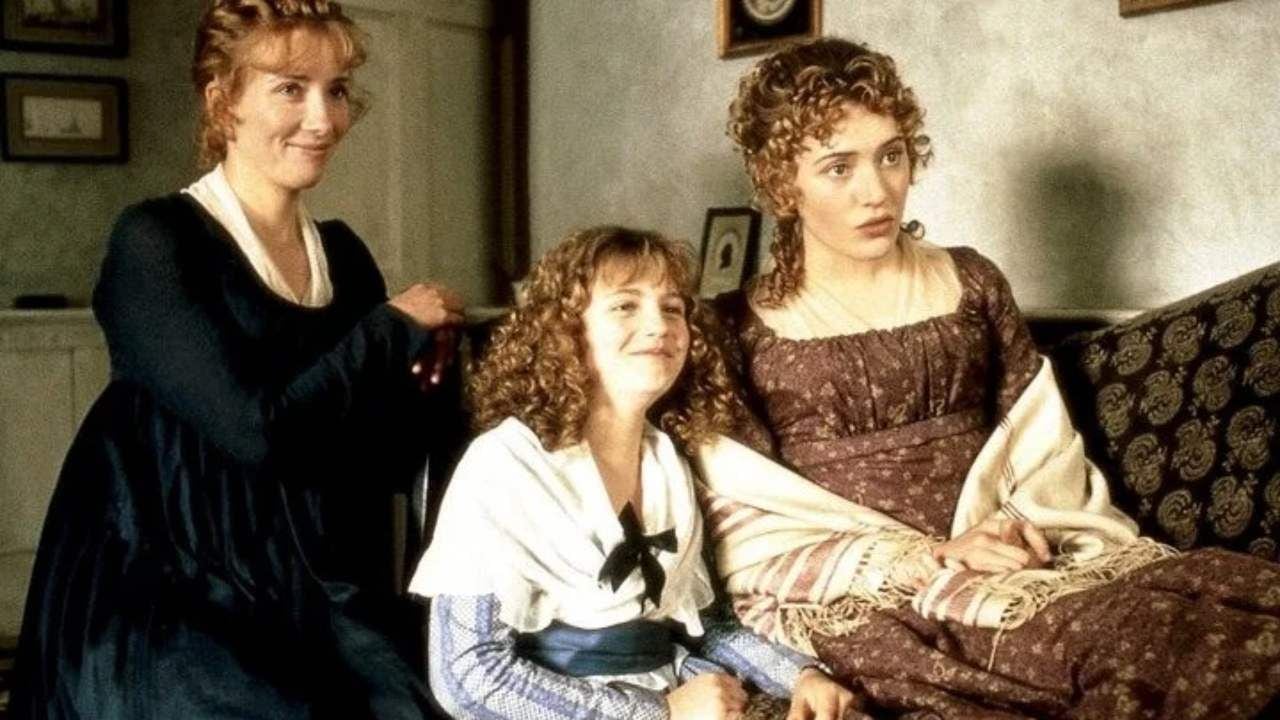
The best-known version of “Sense and Sensibility” is Ang Lee's film from 1995, with Emma Thompson and Kate Winslet as the Dashwood sisters, Hugh Grant as Edward Ferrars and Alan Rickman as Colonel Brandon. Thompson wrote the screenplay and won the Oscar for best adapted screenplay. It is a faithful, elegant and still moving interpretation. Vale the entry.
In 2008, the BBC produced a miniseries with the same title, written by Andrew Davies and featuring Dominic Cooper, Janet McTeer, David Morrissey and a young Lucy Boynton. A more television-shaped approach, with the same literary scaffolding and its own rhythm. The BBC also delivered, in 1995, the miniseries of “Pride and Prejudice” that remains the most popular television version: six episodes starring Colin Firth and Jennifer Ehle. If you only watch one Austen series, start there.
Joe Wright's 2005 film brought Keira Knightley to the role of Elizabeth Bennet and Matthew Macfadyen as Mr Darcy, with Carey Mulligan, Rosamund Pike and Talulah Riley in supporting parts. It is more cinematic than the 1995 miniseries, and for many viewers it is the definitive image of the Bennet sisters. The rivalry between those two versions is one of the pleasant debates that Austen's work still allows.
- “Sense and Sensibility” (1995), directed by Ang Lee: the most complete film version of the Dashwood sisters' story.
- “Pride and Prejudice” (1995), BBC miniseries: six episodes with Colin Firth and Jennifer Ehle.
- “Pride and Prejudice” (2005), directed by Joe Wright: the cinematic alternative, with Keira Knightley and Matthew Macfadyen.
- “Emma.” (2020), directed by Autumn de Wilde, starring Anya Taylor-Joy, Bill Nighy, Johnny Flynn and Mia Goth; available on Prime Video.
- “Emma” (1996), with Gwyneth Paltrow; “Emma” (2009), BBC miniseries with Romola Garai; and “Clueless” (1995), with Alicia Silverstone, which relocates the novel's class conflicts and social maneuvering to a 1990s high school.
“Emma,” Austen's most celebrated comedy, has several versions worth considering. The 1996 film with Gwyneth Paltrow, the BBC miniseries from 2009 with Romola Garai and the 2020 film directed by Autumn de Wilde stand out. The last one, with Anya Taylor-Joy in the lead, has a sharp visual rhythm and a cast that gives the story an unusual edge. “Clueless,” meanwhile, is a modern reinterpretation set in Los Angeles: it transfers the original's class struggles and social tactics to a high school in the nineties. It works, and it works very well.
“Mansfield Park” reached the big screen in 1999 with Frances O'Connor, and television in 2007 with Billie Piper and Hayley Atwell. “Northanger Abbey” arrived on British television in 2007 through ITV, with Felicity Jones as the protagonist. “Persuasion” has been adapted several times, including a recent Netflix version. The list could go on, and that is precisely the point: Austen has not exhausted her repertoire.
“The novels keep returning because the conflicts they describe have not changed: inheritance, money, reputation, family duty and the distance between what people say and what they want.”Lorena Robles
There is a reason these stories remain in public conversation. The novels keep returning because the conflicts they describe have not changed: inheritance, money, reputation, family duty and the distance between what people say and what they want. Jane Austen invented characters who argue about those things with a precision that still feels uncomfortable, in the best sense of the word.
With a new “Sense and Sensibility” in theaters, this is a good moment to go back to the catalog. The BBC miniseries of “Pride and Prejudice” is the essential starting point, Ang Lee's “Sense and Sensibility” deserves a second viewing, and “Emma.” confirms that Austen still works on younger screens. Do not expect everything to be perfect: some versions deserve half the ticket price, others deserve the whole thing. But the conversation with Austen continues, and it is one of the most rewarding. There is always a reader who saves us from the worst adaptation.